Monday, April 5, 2021

D&D BECMI Alternate Saving Throws

After posting a number of articles about character classes, some hindsight might be useful. One reason I wrote revisions and additions was to boost player characters’ lowest levels—hence extra spells at the first few levels, modified class abilities, etc. The other reason was to stretch demi-humans experience progression to the full 36 level range. One pothole remains (I’m sure there are others), but this one needs particular attention: saving throws. These weren’t handled in the RC’s variant rules (see pg. 266), leading me to an expedient using the saving throws of thieves or clerics instead. This was less than ideal. Rather than approach the matter willy-nilly and rely on ad-hoc, seat-of-the-pants guesswork, I thought of reviewing the entire saving throw subject and coming up with rational mechanics applying consistently across the board to all character classes. 

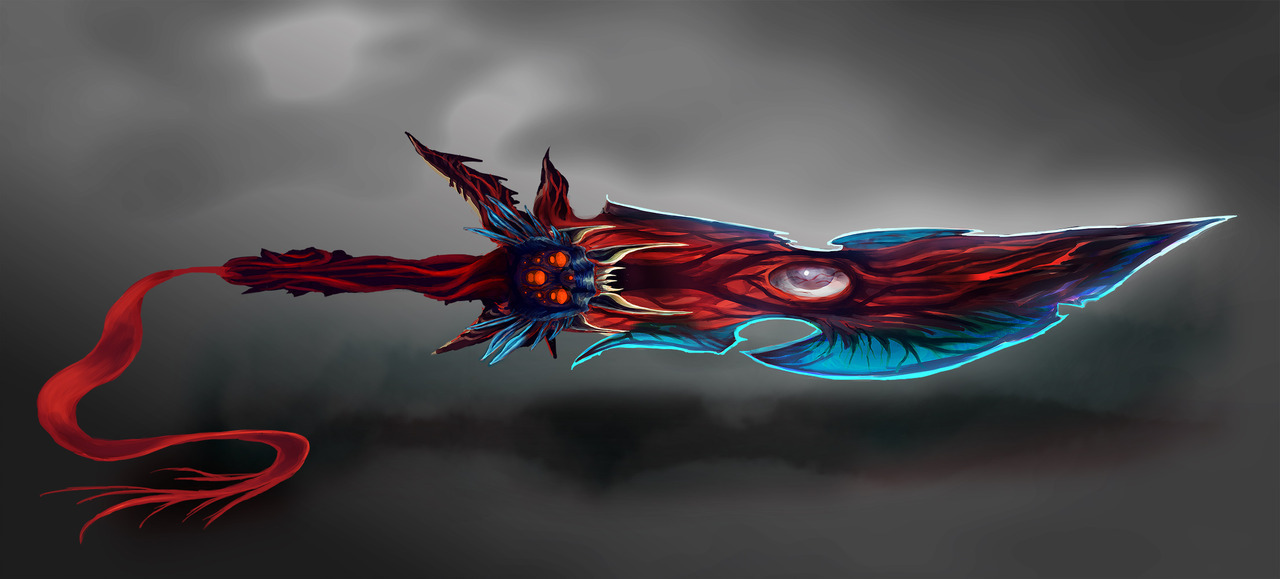
Art Credit: Death Maker by 3mmI on Deviantart.

Regarding D&D BECMI

            With this older version of D&D, be aware that unlike more recent game versions, races are treated as classes—thus an “elf” is a class onto itself, and so are the dwarf and the halfling. While human character classes can reach level 36, demi-humans are limited to around level 10. If you are a big fan of 5e, that’s great but this article isn’t meant for you. Comparisons and personal judgements on the nature of games from the early 80s are irrelevant here and unwelcome. Please consider this analogy: plenty of folks love the latest car makes, with the best modern technology can offer; others collect vintage cars as a hobby. Neither is wrong. D&D BECMI also fits on the vintage side of things, much like most other OSR fares.

Categories

            Classic saving throw categories are as follows:

  • Death Ray or Poison
  • Magic Wands
  • Paralysis or Turn to Stone
  • Dragon Breath
  • Rod, Staff, or Spell

             Inevitably, I questioned this arrangement. I wondered about the logic of combining death rays with poison—perhaps that failing this save would result in instant death. What of magic wands? Why aren’t they lumped together with rod, staff, and spells? It was suggested to me that one might be able to dodge the effects of a wand. Okay, but then can one also dodge the effects of a staff or a rod, or even a spell? I found nothing specific on this subject. Paralysis and turn to stone have a category of their own, although they are different things (one could be related to poison while the other to a spell or a gaze attack). Etc.

Art Credit: Dragon Breath by t-biddy on Deviantart

            Of course, saving throws in BECMI are the result of earlier B/X concepts, and I’m fine with that as regards playing the classic version of the game. I’m looking for an alternate approach. Sure enough, some folks will be shaking their fists and calling me a heretic. Just have an open mind for a bit longer and hear me out. Here's a different arrangement:

  1. Death: Concerns all saving throws whose outcomes are instant death (be it poison, death rays, traps, finger of death spell, creatures less than 5 HD caught in a cloudkill spell effect, etc.)
  2. Device Magic: Includes all magic cast from an enchanted object (rod, staff, wand, ring, crown, enchanted portal, cursed weapon, magical trap, artifact, etc.)
  3. Poison, Disease: Intended for non-magical effects of a biological or chemical origin, including diseases, poisons, drugs, acid, parasites, paralyzing venom, etc.
  4. Area of Effect: Any effect primarily covering a physical area (such as a fireball, lightning bolt, cone or cold, entangle, magical web, or a breath weapon.) Non-magical effects can be included here, as regards siege weapon bombardment, avalanches, earthquakes, or anything affecting a location and everyone within it rather than specific individuals.
  5. Aimed Magic: All other magic, especially spells cast by a live spellcaster targeting individuals or objects rather than an area (charm, hold, sleep, polymorph, petrifying gaze, etc.) If unsure whether an effect is area-based or aimed, treat as the latter.

             When considering which category applies, start with Death. If it doesn’t apply, move to the next listed item: Device Magic. If it doesn’t apply either, check the next entry: Poison, Disease, etc. This order matters because each entry’s challenge level gradually increases, from Death (the easiest to succeed, thankfully) to Aimed Magic (the most difficult).

Art Credit: Soul Eater by Orm Irian on Tumbler

Base Scores

            The next task is to create a set of mechanics to calculate base scores for each character class. Calculations must apply systematically and in exactly the same manner across the board. They serve as a common basis from which to compare the saving throws of demi-humans up to level 36 with those attributed to human character classes. Therefore, all saving throws need to be calculated accordingly (not just the demi-humans'). Three main factors should influence base scores:

  • The Saving Throw Category (as explained earlier)
  • The Character Class (self explanatory)
  • Better vs. Worse: Specific categories each class might be better or worse at.

            Looking at classic saving throws, it’s easy to ascertain they run from 8 to 16 at level 1 (not counting Normal Man). The median score across the board is therefore 12. Fighter and Mystic are the least favorable, while demi-humans seem to be the best.

Handicaps

            A series of base handicaps can be applied to the median score (12) to calculate first level scores. Minuses are bonuses, and plusses are penalties. Modifiers relating to saving throw categories and character classes are straightforward. The "better vs. worse" handicaps, however, need to be plotted out before moving forward. The table below shows which categories are best or worse for each character class.


          Each character class is assigned a type of saving throw for which they are better and another for which they are worse. This ensures that no two classes have the same sets of saves. I included the extra classes I posted earlier (the gnome and the half-orc). Decisions on which type applies to which class are entirely subjective on my part. Feel free to swap classes around if you wish. The mechanics below will allow such changes and show exactly how they affect saving throws. Some of my logic reflects the following thoughts: fighters do their best against dragon breath, but worse against aimed spells; dwarves do their best against aimed spells but relatively worse against areas of effect, and so on. Eventually, the rest falls into place as shown above. All handicaps are compiled in the table below.


Example: To save vs. Area of Effect, a fighter needs a “12,” plus 1 for the category, plus 1 for the class, but minus 1 since this is what the fighter is best at. The resulting score is “13.”

            This simple approach is all that is needed to generate all first-level saving throws for each class. I listed them in the table below. I included the average score for each character class, which explains the order in which I laid them out in this table.


            The final task is to find what the saves are at level 2 and higher. Use the table below and look up the appropriate column for each category. Cross-reference this column with the row corresponding to the character’s experience level.

            For Example: To save vs. Area of Effect, a level 1 fighter needs a “13,” as devised in the previous example. For a fighter level 10, find the column starting with “13” (under Full Saving Throw Ranges), and cross-ref with the “8-10” row (under “F” for Fighter.) The resulting score is “8.”


Attribute Modifiers

            Modifiers from ability scores can have an effect on saving throws. Everyone has their version. Here's one, adapted to the above.

  • Death:  Use Charisma, assuming it is a measure of one's strength of character with enough chutzpah to stare down death itself. Might be cool for a paladin-type. It's arbitrary but, hey, I found a new use for Charisma so don't complain! Constitution also is an option for a deadly poison.
  • Device Magic: Use Wisdom, assuming that it helps figure out whether/how a device might be used, increasing odds of avoiding its effects. This unorthodox use of Wisdom makes even more sense when dealing with divine artifacts.
  • Poison, Disease: Use Constitution here. That one's evident. 
  • Area of Effect: Use Dexterity. Thieving types will no doubt appreciate this, given their wimpy base d4 HD in D&D BECMI.
  • Aimed Magic: Mostly Intelligence, especially against mind-affecting attacks, but also Strength, for paralysis, slow, and petrifaction spells. Other attributes may be relevant--use common sense here.

Conclusion

            In most cases, these saving throws are more forgiving at low experience levels compared with the classic scores (which was one of my goals), but less so at mid or higher levels. How quickly these saves improve is also more benign at low levels compared with classic scores. For example, fighter saves improve every 1-2 levels early on, vs. 1-3 with classic scores; magic-user saves improve every 1-4 levels early on, vs. 1-5 with classic scores; etc. The table showing the full range of saving throws streamlined the progression of saves compared with the classic tables. For example, classic saving throws for a fighter are laid out over 12 rows, while classic magic-user saves take only 8, whereas alternate saves suggested here demand 11 rows for all character classes. As a consequence, the alternate progression per level differs from classic saves in this respect as well.
            The two previous tables are all you need to fill out character sheets. This cuts out the original seven saving throw tables, leaving you with just these two. Furthermore, you can play with the mechanics to modify base saves, while resting assured that you are using consistent numbers at all times. At worst, if you dislike the resulting modifications to the human character classes, keep their original scores, and use the above system only for demi-human saves now ranging up to level 36. For simplicity, treat monsters as fighters, although you could use creative license with what they are better vs. worse at.
            I’ll throw in one last table, for comparative purposes only. It compiles all saving throws for the fighter class, both alternate and classic, with average scores on the far right. The comparison is somewhat valid despite the modifications I made to the categories. They give an idea nonetheless as to how their numbers compare. Overall, the average of all alternate saves (all fighter levels included) adds up to 6.6 vs. 6.8 for classic scores.


Sorry for the lengthy explanations. I compiled the complete saving throw tables for character classes recently brought up on this blog for your convenience. Click here to access the compilation. Hope you enjoy these optional saving throws.

Monday, March 15, 2021

D&D "Revised" Half-Orc Class

This is beginning to sound like an ongoing joke. But hey, since I’m at it, I might just as well. What on @#&! (replace with appropriate game world) am I going to do with half-orcs now? Fret not. I do have a few ideas to set them apart from your basic fighter AND make them feel a tad beastly!

            If D&D BECMI isn't your thing, be aware that unlike more recent game versions, races are treated as classes—thus an “elf” is a class onto itself, and so are the dwarf and the halfling. If you are a big fan of 5e, that’s great but this article isn’t for you. Comparisons and personal judgements on the validity of games from the early 80s are irrelevant here and unwelcome. Please consider this analogy: plenty of folks love the latest car makes, with the best modern technology can offer; others collect vintage cars as a hobby. Neither is wrong. D&D BECMI also fits on the vintage side of things, much like most other OSR fares.

Origins: Much of how orcs are perceived comes from literature, especially Tolkien and the medieval tale of Beowulf, which Tolkien points to as his source. In Beowulf, the “orcneas” are evil spirits (no connection with Orkneys as far as I know). In Tolkien’s Middle Earth, orcs are brutal and malevolent creatures, possibly descended from corrupted elves. Previous to this, “orc” came from the Latin “Orcus,” a name for Pluto, the god of infernal regions. In old Anglo-Saxon, orc refers to some kind of goblin (don’t tell the orcs). In the 17th century, the word morphed into “ogre.” The latter term came into English through French fairy tales which took it from Italian literature—“orco” referring to a big, hairy, tusked, man-like monster that seeks to devour people. It was meant consistently through the ages as a malignant and brutal boogeyman to scare a storyteller’s audience.

How do I see Orcs? Based on original depictions in roleplaying games, it’s a brute living within a tribe’s rigid pecking order reflecting individual strength and ferocity, and who is often inclined to acquire by force what it needs or wants. Spiritual beliefs reflect a rough-and-tumble culture, and appear to the outside world as crude and blood-thirsty. Much of what is known of orcs comes from how their victims see them. They are universally thought of as malevolent thanks to their harsh upbringings in the harshest of worlds. Would they remain naturally evil under different life conditions? Perhaps, but at the very least, their fundamental character endures: coarse mannered, distrustful of those above them, intolerant of rivals, and unforgiving of those they perceive as weaker. Somewhere between belligerent and thuggish, orcs bow nonetheless to those who prove themselves tougher… or they die. They are compelled to confront or bully others because their kind always had to fight over scarce resources for the sake of their tribes’ survival. It’s in their blood. Strength, ferocity, and resilience run deep, along with a wild streak. 

Concepts: I see the half-orc more as a warrior class in BECMI than anything else. The goal is not to make the existing fighter class less attractive or short-change the half-orc. Rather, game mechanics for this class of warriors should illustrate the half-orc's mindset and ancestral traits: Strength and Ferocity, by Khroomsh!

            Half-orc warriors need not fight as well as fighters. These pragmatic folks aren’t interested in the technical end of things. Spirit and resilience is what makes up for their lack of sophistication. I can guarantee you that your half-orc will not want to run from combat. What happens during a battle, therefore, determines how hard your half-orc will fight. It won’t go down easily, and can recover from its wounds on its own. It’s really good at snarling too. Its fairly benign experience progression table is a straightforward affair. It encourages cunning warlike instincts rooted in eons of fine tactics evolution: Khraugor smash!

The New “Revised” Half-Orc Class

Prime Requites: Constitution. Strength should be at least 9.

Experience Bonus: I give a +5% if Con lies between 11 and 12, and +10% if less than 11, implying that all other stats are lower than the prime requisite. At 13+, stats provide conventional bonuses.

Hit Dice: 1d8 per level up to 9th level, +2 hp per level thereafter, and Con adjustments no longer apply.

Maximum Level: 36.

General Abilities: Fights and saves as a thief. Starts with 2 weapon proficiencies (instead of the fighter’s 4) and earns new ones as a thief.

Armor & Weapons: Any. Although half-orcs are free to wear any sort of protection, excess armor may eventually prove counterproductive to this character class. It’s up to the half-orc to strike the right balance between risk and benefit.

Special Abilities: Extra languages (dwarf, goblin/hobgoblin, ogre, troll); –2 Cha bonus with orcs and half-orcs related to rival tribes; Infravision 60’. Half-orcs may wear tattoos related to their ancestral tribes. In an odd and slightly masochistic way that other races do not fully grasp, half-orcs gain combat bonuses when suffering damage (First Blood & Battle Scars). Under certain conditions, they also heal on their own (Resilience).

Fighter Combat Options: As fighter.

Special Defenses: None.

Daylight Penalty: –1 to hit and saving throws when exposed to direct sunlight (ignore in overcast conditions or within an hour of sunrise and sunset). A goblin hireling with a large parasol can’t solve that problem. Sorry.

First Blood: When first blooded by an opponent, the half-orc gains a +2 bonus to hit against this foe alone. If this first wound inflicted at least 1/10th the half-orc’s normal hit points, the half-orc’s following attacks also inflict +2 damage against this foe alone. These bonuses are cancelled when this foe is stricken down; they cannot be accumulated and carried over to other foes. On the other hand, when fighting multiple opponents who inflicted wounds to the half-orc, the half-orc earns its +2 bonus against each one separately. Want a piece o’ me, punk?

Battle Scars: When reduced to 1/10th its normal hp or less during a battle, the half-orc suffers a permanent scar. With each battle scar, the half-orc earns a +1 to saving throws, up to a maximum of +4. The half-orc also incurs a   –1 penalty to Cha for each battle scar, up to –4 when addressing other races. Battle scars confer instead +1 Cha bonuses (up to 18 Cha) when interacting with other half-orcs (see Posturing Snarls later on), as they are a mystical source of great personal pride and accomplishment. I got more scars than you. (Oh yeah? Mine are bigger!) 

Resilience: After slaying a foe in battle, the half-orc heals 1 hp per hour until fully recovered. This ability does not regenerate destroyed body parts or revive a dead half-orc. With 5 battle scars, it heals 2 per hour, with 10 scars 3 per hour, etc. This mind-over-body aptitude is only triggered by the thrill of slaying a foe with at least half as many HD as the half-orc’s. For example: A level 1 half-orc can trigger its healing ability when slaying a puny kobold in battle; however a level 8 half-orc would need to strike down an ogre instead. The slaying must be in the context of a battle—executing prisoners or helpless foes does not elicit a sufficient thrill level.

            Death Door: Most DMs have their own rules on what constitutes "death" in their games. In many, a PC lies at "death's door" when hit points drop to zero down to –10. If this results in "blood loss" (losing a hp each round), then resilience will not be sufficient to revive the wounded half-orc. On the other hand, it could slow blood loss to 1 hp every two rounds. Us folks is tougher!

Battle Roar: A half-orc bearing at least one battle scar can roar once per battle. All foes within 90' receive a –1 penalty to Morale Check thereafter. The penalty grows for every 3 permanent battle scars, up to –4. The battle roar counts as a full action as it is somewhat equivalent to a warrior's haka. The next action must be to engage in hand-to-hand combat. Beat it, vermin!

Posturing Snarl: When half-orcs meet, they may snarl at each other for one round. They both roll a d10, adding their Charisma and battle scar bonuses. The one with the worst result backs off and accepts the other’s leadership. Ascendancy ends when the underling earns a new battle scar, at which point snarling may resume. If they’re tied, snarling continues for another round. If still tied, fighting ensues until one yields… or dies. You talkin’ to me?

Self-Inflicted Wounds: Deliberately harming oneself, directly or indirectly, or inviting injury at the hands of another does not trigger first blood or resilience effects. Self-inflicted damage negates resilience if healing was still in progress. Self-inflicted battle scars do not count; a half-orc rumored of self-mutilating would be seen as an outcast and a coward, resulting in all battle scars permanently losing their “beneficial” effects.

            On the other hand, cutting oneself for 1 hp and licking the blood off the blade with wicked glee, is mighty acceptable and righteous when specifically meant to intimidate. The action affects one immediate opponent or a group of foes with HD (individually or collectively) less than the half-orc’s. If these conditions are true, then the targets of intimidation must immediately roll a Morale Check. This show of sheer savagery bears no adverse effect on first blood, resilience, and battle scars, but can only be performed once per battle. Hawrrrg! It’s not Nutella!

Regarding Spellcasters: The Rules Cyclopedia allows spellcasting orcs—tribal shamans and sorcerers up to levels 6 and 4 respectively. As NPCs or monsters, this option is easy enough to put into effect. PC spellcasters are a different issue. Though half-orcs aren’t “full-blooded” orcs, the idea of an unlimited and proficient half-orc magic-user conflicts with this article's paradigm. Certainly, half-orcs can have clerics. For the half-orc to enjoy a cleric’s spellcasting ability in addition to its other class abilities, start out with 2,300 xp needed for level 2, doubling up to level 8, and with an additional 120,000 xp per level thereafter. Check the revised spell progression I gave clerics in a related article (click here).

Regarding Calidar: This setting hasn’t used half-orcs as of yet. I may just use the above material as an alternative to the setting’s inspiration from AD&D 1st Edition multi-classed demi-humans. None of what is posted here has been play-tested. Actual gaming feedback would be appreciated. Thanks!

Coming Next: The half-orc's favorite adventuring companion.

Thursday, March 11, 2021

D&D "Revised" Gnome Class


D&D BECMI only offers gnomes as monsters (for example, as listed in the Rules Cyclopedia, page 180). I’m sure plenty of other DMs have created their own versions inspired from AD&D or present-day D&D 5e. Not one to follow anyone else’s footsteps, I decided to start from scratch. This article connects with several earlier ones revising the original character classes and addressing the issue of their spell progressions. If you haven’t seen those, start here: D&D Alternate Spell Progressions.

            If you are unfamiliar with D&D BECMI, please note that unlike more recent versions of the game, races are treated as classes—thus an “elf” is a class onto itself, and so are the dwarf or the halfling. If you’re an unconditional supporter of D&D 5e, that’s great but this article isn’t intended for you. Comparisons and personal judgements on the validity of games designed in the 70s and early 80s are irrelevant here and unwelcome. Please consider the following analogy: plenty of folks love driving the latest car models, with the best that modern technology offers; others collect vintage cars as a hobby. D&D BECMI, as it were, also fits on the vintage side of things, much like most other OSR fares. It’s part of the hobby. Drive on!

In the Beginning: A quick look into the background of the term “gnome” indicates it’s been in use since the 16th century at least. Paracelsus described them as small-size earth elementals able to move through solid earth. 18th century depictions alluded to small, subterranean guardians of treasures, mines, and precious stones. In the 19th century, gnomes were presented variously as being relatives of dwarves, elves, or fairies depending on the authors. In the 20th century, Tolkien described them as technologically talented, dark-haired elves with great gem-cutting skills. Frank Baum and others made gnomes Santa’s little helpers. In the Chronicles of Narnia, they are definitely a subterranean race as well. In the World of Warcraft, gnomes started out as machines that later became organic lifeforms, and as would be expected, savvy with mechanical devices. The idea of small-size subterranean miners hoarding gems and treasures prevails. In D&D’s present days, gnomes are often played as illusionists or techno-gnomes, such as those in Dragonlance. Many players today assume that gnomes are “fey” creatures related to elves. On the other hand, D&D BECMI clearly describes them as being related to dwarves, although some can be spellcasters. Lots to choose from. 

Main Directions: Streamlining all this is needed. First off, I’ll skip Top Ballista’s “sky gnomes” since PC2 already addresses those. I’ll stick with BECMI relating gnomes to dwarves, except they do possess fey abilities. I don’t really want to make them a cross between dwarves and magic-users, à la AD&D 1e. Unlike with the aforementioned game, BECMI doesn’t offer a whole lot spells specific to illusionists to which I could limit gnomish spellcasters. On the other hand, gnomes are often thought of as tricksters with unnatural powers. I’m thinking more along the idea of special abilities improving with experience, rather than a full-fledged spell progression. I’d scale these abilities from level 1 to 20 to accommodate conversions to other systems topping out at level 20, rather than BECMI’s 36 levels. Since few players ever get their characters past level 15 anyway, this approach would allow them to try out most of the gnomes special abilities.

            The gnomish class ought to enjoy many of the dwarven features, given their common origins and shared environment (subterranean lairs and mines). Some of the halfling benefits may also apply, given the small sizes of these two races. As regards combat, since gnomes are somewhat related to dwarves, they ought to fight and roll their saves as dwarves. On the other hand, a base d4 HD seems appropriate in exchange for abilities they are receiving. They wouldn’t last long in a melee situation, but they could provide excellent sling or crossbow support. Thankfully, armor should not interfere with their fey abilities. Sensing precious metals and stones, and appraising them should be a no-brainer. A significant ability to create, build, and operate machinery is probably a must. Going back to the original Paracelsus version, an affinity with earth elementals might not be inappropriate either. 

The “New” Gnome Class

Prime Requites: Intelligence and Charisma; Strength should be at least 8. Adult noses must measure at least 3 inches long (less with regular medical treatment).

Experience Bonus: You’ll never catch me giving free xp to any character because of high stats. It’s unfair in my opinion. Instead, I give a +5% if Int and Cha average out between 11 and 12, and +10% if they average less than 11, implying that all other stats are lower than the prime requisites. At 13+, stats provide other conventional bonuses.

Hit Dice: 1d4 per level up to 9th level, +1 hp per level thereafter, and Con adjustments no longer apply.

Maximum Level: 36.

General Abilities: Fights and saves as a dwarf.

Armor & Weapons: Any of the appropriate size.

Special Abilities: Extra languages (dwarf, goblin, kobold, earth elemental); +1 Cha bonus with earth elementals; 1 in 3 chances to detect traps, sliding walls, sloping corridors, new constructions. Infravision 90’. Sensing precious metals and gemstones; appraising gemstones. Free engineering and machine operation skills. Invoking up to 3 illusions per day.

Fighter Combat Options: Two attacks are possible at 12th level, three at 18th level. Does not include lance attack or set spear against charge.

Special Defenses: Earns a +2 bonus to Armor Class when fighting creatures larger than man-sized. From level 10 onward, halves effects from damage-inflicting magic, area-of-effect spells, and breath weapons; sustains ¼ damage with a successful saving throw.

Sensing Precious Metals and Gemstones: With a nose at least 3 inches long, the gnome may sniff out the presence of such within 60’ without intervening obstacles (doors and walls), or 30’ through non-magical obstacles. Odds of success are 1 on a d6 roll inadvertently, or 1-2 if the attempt is deliberate. Success indicates the general direction of the goods and whether obstacles are present. Choosing “Cyrano” as a name does not entitle the gnome to a +1 bonus.

Appraising Gemstones: The DM rolls under the gnome’s Int rating. With an unmodified roll of 1, the gnome senses the object’s accurate value and whether it is imbued with magic. If the roll succeeds, appraisal is +/–10% of actual value. If the roll fails, appraisal is off by the extent of the failure multiplied by 20. For example: the gnome’s Int rating is 16 but the roll scored a 19—the error is equal to 19–16 = 3, 3 x 20 = 60%. If the error was even, then the value is overestimated, or underestimated if odd. With a critical fail, multiply the result by 10 once more. Thus a 60% error becomes a +/–600% (at –100%, an object is deemed worthless). They do have the nose for business, mind you.

Engineering: A gnome generally needs two ability checks when first examining unknown machinery. The first concerns whether the gnome understands what the contraption is intended for. If this roll succeeds, the next one enables the gnome to operate the apparatus. Mishandling a device after a successful roll is always possible, requiring extra checks when performing new actions, causing the object to malfunction or do something entirely unexpected if a new roll fails. Operating machinery after failing to grasp its operation should double chances of malfunctions and other catastrophic mishaps, triple the odds if its intent is mistaken as well. Under these conditions, a gnome may be able to repair or even build machinery. This aptitude for mechanical devices also enables the gnome to disarm mechanical traps like a thief half the gnome’s experience level.

Illusions: Gnomes can use illusions up to three times per day, regardless of their experience level. The difference lies in the choice of available for what sorts of illusions might be invoked and how good they are. Range, area of effect, and duration increase on a per-level basis. Illusions do not move with whatever they targeted, unless indicated otherwise. The gnome or a spellcaster’s magic can dispel the effects at any time. Unless indicated otherwise, an illusion ripples and fades away if touched.

·       Range: 60’ plus 5’ per experience level after the first.

·       Area of Effect: 3’ high by 3’ wide (by 3’ deep) plus 1’ per experience level. For example: A 36th level gnome would be able to invoke up to three illusions per day, 39’ x 39’ x 39’.

·       Duration: Concentration or 1 Turn (levels 1-5), 3 Turns (levels 6-10), 1 hour (levels 11-20), 1 day (levels 21-30), 1 week (level 31+), whichever lasts the longest.

            These powers are innate and do not require spell preparation or memorization. There are no spellbooks or scrolls associated with them. Gnomes may use any of the illusions available to them at will, up to three times per day. They take a round of concentration to form, but require no verbal or somatic components—they result entirely from gnomish thoughts. The experience progression table shows which effects are available to choose from and how good they are. Gnomes can pick from 3 sorts of illusions—veil, mirror, or vision. How effective they are and what they accomplish depends of the gnome’s experience level.

Veil: It hides something or someone that fits within the area of effect. Although the veil isn’t a tangible manifestation, it acts like cloak hanging or draped over the object or creature to conceal. The gnome may select as desired some or all available effects described below. A veiled target performing any sort of attack will cause the illusion to ripple and fade by the end of the round. Saving throws aren’t relevant to magical veils, except for an unwilling target.

Type I: It renders the veiled target invisible. The effect ends if the target makes physical contact with someone, or the effect is dispelled.

Type II: As above, plus sounds, smells, shadows, footprints, airborne dust, sprayed paint, and infrared auras within the veiled area are entirely negated.

Type III: As above, plus the veil moves along with its target, and objects can be picked up and brought into the area of effect.

Type IV: As above, plus the veiled target becomes incorporeal. Although the veiled target cannot be physically touched by hand or projectile, it is otherwise of a material nature (it cannot pass through walls, for example).

Type V: As above, plus the veiled target is immune to mind-affecting and gaze attacks.

Type VI: As above, plus the veiled target cannot be revealed or located with any detection/divination magic.

Mirror: It is a two-dimensional screen reacting to what gazes at it. Unless indicated otherwise, there are no saves against mirror effects.

Type I: The screen acts as a normal, free-standing mirror. The mirror itself is not visible—only what it reflects. Though it isn’t a tangible object, it masks anything directly behind it (the originating gnome, a doorway, an alcove, writing on a wall, etc.). Oddly, unlike a real mirror, it can produce a vampire’s reflection as well as show the reflections of invisible, incorporeal, or gaseous creatures. If the affected area is touched by hand or projectile, the mirror ripples and fades by the end of the round.

Type II: As above, plus the mirror appears as a hard, tangible surface. It reflects any physical attack, directing it back to its attackers. It only vanishes if magically dispelled or when the illusion ends.

Type III: As above, plus the mirror reflects any magic cast at it other than a dispel-magic spell, directing it back at its caster.

Type IV: As above, plus the mirror acts as a portal for the gnome and anyone named (same size or smaller than the mirror) when it is brought into existence against a stone surface. It enables those entitled to use it to reach the first open area directly behind the mirror and within the effect’s normal range (60’ plus 5’ per experience level after the first). If there is no open space within range, this effect is negated, otherwise an identical mirror materializes on the opposite side, enabling its users to return or look back through it at the previous area. Both mirrors last for the illusion’s normal duration or until dispelled.

Type V: As above, plus victims looking into the mirror must save vs. death ray or become stunned (⅓ MV, cannot attack or cast spells, –2 penalty to AC and saves; save vs. death ray each round to recover).

Type VI: As above, plus observers (same size or smaller than the mirror) who aren’t stunned must save vs. spell or become trapped inside the mirror for the duration of the effect. Treat as a mirror of life-trapping (see RC. Page 240). 

Vision: This is more akin to phantasmal forces, although as the gnome earns experience levels, the quality of the visions improves. Unwilling targets can save vs. spells to disbelieve visions (DM’s roll). Saves incur penalties depending on the type of vision (–1 for Type II visions, –2 for Type III, –3 for Type IV, etc.). A 20 always saves; a 1 always fails.

Type I: The effect conjures one sensory element that is either visual, olfactory, auditory, or other perceivable sensation (heat, cold, a nagging unseen presence, a sense of impending doom, etc.) If visual, the illusion is static; if touched by hand or projectile, it ripples and fades away.

Type II: As above, although all sensory elements can be combined in addition to a tactile sense. The illusion can be touched without getting dispelled. It remains entirely static, however.

Type III: As above, plus the vision is animated as long as the gnome concentrates on the effect. It can be programmed to repeat a specific set of actions before the gnome walks away. The vision must remain within the area of effect.

Type IV: As above, plus the vision may move out of the area of effect, but must remain within the effect’s range. Its MV is 90’ (30’) or the assumed MV rate of the imitated creature.

Type V: As above, plus the vision can react to nearby elements and people as the latter imagine it could (in the absence of the gnome), possibly fighting back, dodging, recoiling, roaring, etc.

Type VI: As above, plus the vision is a cogent creature. The gnome must be familiar with it, and the imitated creature must possess fewer HD than its creator. It can move beyond the effect’s range. It possesses the gnome’s alignment, half its Intelligence rounded up +3, a Morale rating of 12, and is immune to mind-affecting attacks. It can hold a conversation with nearby folks using any of the gnome’s learned languages, and respond to ESP probes. It supports in every way the gnome’s intent (if the gnome isn’t around) to the best of its abilities. Its Armor Class is consistent with the imitated creature; it merely appears to suffer wounds, but doesn’t actually “die” unless dispelled or the effect reaches the end of its normal duration. Any spells it is assumed to be able to cast remain entirely illusory. The gnome can use this vision as a companion for the duration of the effect, but only one such vision can be maintained at any single time.

Regarding Spellcasters: The Rules Cyclopedia allows spellcasting gnomes—clerics or magic-users up to level 12. Clearly, armor interferes with magic-user spells. As NPCs or monsters, this option is easy enough to put into effect. PC spellcasters are a different issue. For this gnome to enjoy a cleric’s spellcasting ability, start out with 2,300 xp needed for level 2, doubling up to level 9, and with an additional 150,000 xp per level thereafter. For the gnome to wield a magic-user’s spellcasting ability, use the revised elf’s progression table I described in a previous article (click here).

Regarding Calidar: This setting uses gnomes largely as intended in AD&D 1st Edition, essentially as multi-classed demi-humans. However, the version described in this article works more smoothly with D&D BECMI or games like Labyrinth Lord. None of what is posted here has been play-tested. Actual gaming feedback would be appreciated. Thanks!

Click here for the Half-Orc Class

Thursday, February 25, 2021

Alignments: 2 vs. 4 Trends


I recently updated guidelines to convert Calidar ratings to classic OSR stats. In particular, the issue came up about alignments. The conundrum emerged as follows:

  • Calidar uses 4 trends: Benevolent vs. Malevolent and Rational vs. Instinctive.
  • Classic OSR only recognizes Lawful vs. Chaotic.
How to translate AD&D into basic D&D stats and vice versa has always been the subject of debates. It is "almost" exactly the same here. Calidar has, however, one feature that solves the age-old question.

Calidar assigns numerical values to gauge trends. So if someone is deemed benevolent, the question then becomes: how benevolent? Though values range from 0 to 10 in theory (zero being "neutral"), 0 to 6 is more common. So, if this guy is Benevolent "1," well, he's okay, kinda-sorta. If he's Benevolent "10," put on your sunglasses, 'cuz he's too awesome to contemplate!

There's a bit more to this. Calidar has actually 6 trends. Heart (Benevolent vs. Malevolent), Mind (Rational vs. Instinctive), and Spirit (Lively vs. Stern). Calidar philosophies can be abbreviated as follows: H (for Heart), plus or minus a numeral. "Plus" alludes to Benevolent, "minus" to Malevolent, and * to someone who's neither (basically a Neutral trend). Likewise for Mind, "plus" relates to Rational, "minus" to Instinctive. For Spirit, "plus" relates to Lively, and "minus" to Stern.

So, a paladin might have the following trends: H+5/M+5/S-2. Your basic thief could instead be rated: H*/M-4/S+3. A druid would be H*/M*/S+6, etc. Conversion to the AD&D game, for example, is straightforward: just drop the Spirit trend since it doesn't translate, and you're good to go. The paladin is LG, the thief CN, and the druid just plain N. You're done.

For classic OSR, there is more to this as four trends need to be shoehorned into just two: Lawful or Chaotic (along with Neutral, if neither of the other two applies). It's where numbers become more relevant, aside from the face value of the information they provide to begin with. Three options emerge:

  1. If H and M trends both have numerals 0-2 (regardless of whether they are "pluses" or "minuses"), the classic OSR alignment is Neutral. These are fairly weak trends.
  2. If H and M are 3 or greater (regardless of "pluses" or "minuses") and are equal, then Heart prevails. For example: H+3/M-3 is Lawful, H-3/M+3 is Chaotic. In other words Benevolent is Lawful, Malevolent is Chaotic.
  3. If H and/or M is/are 3 or greater but with different numerals (regardless of "pluses" or "minuses"), the greatest of the two trends prevails. For example H+2/M-3 is Chaotic, H-4/M+5 is Lawful, H+4M* is Lawful, H*/M-3 is Chaotic, etc.

This should solve the issue.

The numerals in "calidarese" relate to actual personality traits, if you really want to go this far to describe the temperament of a character or a monster. Just pick the ones that apply, count them up, and you have your rating.

Heart

o   Benevolent: Friendly, altruistic, humble, merciful, considerate, generous, truthful, trusting, tolerant, magnanimous

o   Dispassionate: None

o   Malevolent: Wicked, selfish, insensitive, vengeful, deceitful, unscrupulous, mistrustful, jealous, manipulative, spiteful

Mind

o   Rational: Analytical, calculating, patient, straightforward, cautious, stubborn, methodical, conventional, principled, obedient

o   Practical: None

o   Instinctive: Impulsive, hasty, emotional, unpredictable, bold, creative, curious, adventurous, cunning, unruly

Spirit

o   Lively: Mirthful or sarcastic, cheeky, flamboyant, passionate, outspoken, hedonistic, shameless, feisty, indomitable, eccentric

o   Even-Tempered: None

o   Stern: Ascetic, aloof, brooding, formal, dreamy, haughty, enigmatic, reserved, self-conscious, dour

 Art Credit: The Cycle of Rebirth by Quarter-Virus

Thursday, February 11, 2021

D&D Revised Halfling Class

Previous "experimental" articles recently addressed a desire to boost low level characters used in the D&D BECMI game. So far, the spell progression tables for magic-users and clerics have been addressed, I've given the elf class my take on related issues, as well as the classic thief's skill progression table. I haven't addressed the classic fighter and dwarf classes since I didn't think they needed anything extra. One more topic remains therefore: halflings, the grandest of little heroes.

Disclaimer: These articles are exploratory in nature. Anyone reading this who is of the opinion nothing in the grand ol' RPG should ever be altered, this isn't for you. But you knew that, right? Just in case: this isn't AD&D or D&D 5e. These are different games, with different mechanics. Changes I'm suggesting will intentionally alter the balance of the game at the first few levels. I guess I'm a heretic. Playtest is needed to identify what still appears too weak or seems too powerful in order to ensure all classes remain equally attractive. Constructive feedback is always welcome. Gripes and fist-shaking... not so much. Thank you.

Back to the Halflings. Based on what I could observe over the years, few people really like the "official" halfling. Its by-the-book benefits are as follows: a few combat bonuses, stealth abilities, resistance to spells and dragon breath at higher levels, and really good saving throws. Were all those enough to make the halfling as attractive as the classic fighter? Apparently not. I think the biggest issue is the level limitation. The RC introduced optional rules (page 266) enabling demi-humans to reach level 36, like human classes do. As a result of this, suggestion is made there to use the cleric's combat table.

General Ideas: I'd like to suggest a drastic revamp. Following the idea of the elf being a hybrid fighter/magic-user, I thought of making the halfing a hybrid fighter/thief, with a twist. Halflings have been portrayed in fantasy literature and hobby gaming as folks oriented toward nature. Following this mindset, perhaps halflings should also have a limited access to druidic spells. This would depart dramatically from the notion that D&D BECMI should be as simple as possible. A halfling with some thieving skills and some spellcasting ability does not make for a "simple" character class. With a broad grin on my face, I'll just say that I'm really not writing this article for noobs anyway. So there!

Spellcasting: My "alternate" halflings earn their first druidic spell at level 2. Access to higher level spells comes much later compared with the "official" cleric. Halflings earn 7th level spells at level 25, vs. the 17th for a normal cleric.  If absolutely needed, normal clerical spells can be substituted for druidic magic, provided the choice of immortal patron warrants it. Druidic spells are more related to the halfling's closeness to nature than actual alignment orthodoxy (as regards Lawful or Chaotic vs. Neutral) or a specific faith. Alignment otherwise ought to befit a chosen immortal patron.

Burglary Skills: Alternate halflings do not enjoy the classic thief's backstab ability. I also removed Pick-Pocket as an option. Given how short halflings are, trying to pick a human-sized individual's pockets might lead to improbable situations. I combined Open Locks, Find Traps, and Remove Traps into one single Fingerwork skill. In a bind, Fingerwork can also be used for anything requiring precise manipulation. Outdoor Stealth comes from the official rules allowing a flat 90% chance of success hiding in woods and underbrush (I'd throw in any vegetation tall enough for halflings to hide in, such as cornfields, for example). Indoor Stealth is akin to the thief's Hide in Shadows, although it does not allow moving while hidden (as described in the official rules). I'd halve the outdoor score and request a reroll anytime the halfling attempts to move. Most success scores are lower than those I listed in the improved thief skill table I posted earlier.


The remainder of official rules seems appropriate to retain. This includes the combat bonus table (RC, pg. 26), special attacks, fighter combat options (at 13th and 24th levels), and special defenses (at 9th and 15th levels). Attack rolls and saving throws should be those of the classic cleric. Base HD remains a d6, +1 hp at level 9 and above. I've also trimmed down experience points needed at level 9 and higher.

Conclusion: Although this version of the halfling cannot compete directly with my "upgraded" thief, it can still prove useful in this capacity. It does have better combat skills and special abilities due to its size, as well as a base d6 HD (vs. d4 for the official thief). This halfling also develops druidic spellcasting, with a slow spell progression compared with the cleric's. 

Edit: This variant of the halfling ought to be limited to just leather armor, given its thief-like features and druidic spellcasting.


Monday, February 8, 2021

D&D Revised Thief Class

Following the general goal of making low-level characters a bit more efficient (see previous article), I had a look at the standard D&D BECMI thief class. Some of the success rates for first level characters are really low in the official rules. Increasing some of the initial scores while preserving those at 36th level seems like a no-brainer. I recalculated everything in between, using the same numbering scheme as the one in the standard rules. Effect: 1st level thieves get the greater benefit, while upper level characters gradually return to success odds given in the original rules. 

I didn't think the thief needed a whole lot of tinkering--certainly nothing like what I suggested for the elf. I had a look at class benefits other than thieving skills. There could be some minor tweaks, as follows.

Backstab: If the mechanics on Weapon Mastery are not in use (see RC pp. 75-80), I would suggest increasing the damage multiplier at higher levels, x3 at 10th level, x4 at 15th, and x5 at 20th. I'm sure everyone out there have their own approaches on this. I only multiply the damage rolled (not magic and strength bonuses). If Weapon Mastery is in effect, then limit the multiplier to x2 (multiply the weapon's base damage including "plus" modifiers listed on the Weapon Mastery table). Complying with the above ensures maximum damage with a normal sword stays around 40 hp regardless of whether Weapon Mastery is in use.
          There's a newly implemented Bruce Rule (perfect for this occasion!) When I play a thief and gleefully demonstrate a beautiful 18+ natural score on my backstabbing Attack roll, you can safely bet I'll roll a 1 for damage. I kid you not. It's like rolling nothing but ones when casting your first fireball. I once had a pile of hard-earned "luck coins" generously proffered by a DM, which enabled me to trade one in exchange for rerolling a bad score. Sure enough, I traded all six in quick succession, rolling nothing but miserable fails, until the very last roll yielded a critical fail with which I was finally stuck. Trust me, I'm a specialist when it comes to bad rolls. So! The Bruce Rule for backstabs is that players may choose between scoring maximum damage OR applying the damage multiplier. So, if you roll a 1-3, it'll be 8 pts of damage from your "trusty" sword; if you roll 4-8, apply your x2 multiplier instead. 

I say! No longer shall your wretched thieves be cursed with beggarly damage
from their most fair-and-square backstabs!

Read Languages: Alors là, on ne change rien du tout, et si t’as pas compris, t’as raté ton jet.

Scrolls: I'd allow 1st level thieves spellcasting from scrolls just for the sheer fun of it, implementing a 25% chance of backfiring, until 10th level.

Beginners' Luck: Here's a wildcard helping low-level characters. A first level thief rolling a 91 or worse while using a thieving skill gets to reroll the pathetic result. Whatever is rolled next must apply. Especially given the D&D BECMI thief's d4 base HD, such a small boost early on will be much appreciated. Beginners' Luck decreases at level 2, only concerning scores 96 or worse. At level 3, it solely concerns the odd "00" scores. At level 4 and higher, Beginners' Luck runs out... since these characters really aren't newbies at all (and they get Read Languages anyway, which more than compensates).

Monday, February 1, 2021

D&D Revised Elf Class

Following the previous article and logical questions from readers, here's my attempt at tinkering with elves. The original goal was to make a few more spells available to low level characters. This was easy enough with magic-users and clerics. Elves (as described in the D&D BECMI rules) are decidedly more problematic. In the standard game, elves are "kinda/sorta" limited to 10th level. This never made sense to me, and it looks pretty awkward. In the optional rules introduced in the RC, page 266, level limitations are done away with, and elves are enabled to acquire spells at the same rate as human magic-users. I didn't like this either, given that BECMI elves are basically a hybrid fighter class. Should they obtain as many spells as specialized magic-users? Maybe not. That's a lot of variables. Let's first have a look at how elves compare with the magic-user and fighter classes.

Hit Dice: Elf gets a d6 vs. fighter's d8. After the 9th, the elf gets +1 hit points per extra level. The fighter gets +2.

Attack Rolls: Elf and Fighter enjoy the same attack table when using the standard rules. The RC's optional rules suggest using the cleric's combat table instead.

Saves: The elf's saves are way better than either the fighter's or the magic-user's. They bottom out at 2 starting at 10th level. RC's optional rules do not alter this, so from 10th to 36th level, the elf saves with just a 2 or higher on a d20. Hmm...

XPs: Ouch. The fighter needs 2,000 XP to reach level 2. The magic-user needs 2,500. The elf needs 4,000. Though I understand the logic, I think that's a bit much since the elf isn't as good as a fighter and is limited in its experience levels. It's not much fun trying to level up these elves either.

Spells: In the standard rules, the elf acquires spells like magic-users, but is limited to 5th level spells. In the RC's optional rules, there's no limitation.

Conclusion: The elf isn't quite as good as a human fighter with standard rules. With the RC's optional rules, they get worse. Saves in the RC's optional treatment are downright goofy in my opinion. XPs are a pain to deal with either way. Since the elf isn't supposed to be as good as a specialized fighter, why then should the elf be as good as a specialized magic-user? I'm sure everyone has their own opinions on the matter. If the elf were as good as either class in every way, then 4,500 XP would be needed to reach level 2 (F 2,000 + M-U 2,500 = 4,500 XP). I'm definitely not going there! I'd like to suggest a hybrid solution that takes all the above factors in consideration. 

"Alternate" Elf with Extra Spells and no Level Limitation

As a first step, I toned down the XPs needed just a tad, especially at the first few experience levels. I personally never played at the really high levels that BECMI offers, and I don't know of a whole lot of players who have either. So, I'm not going to worry an awful lot about anything higher than levels 15-16.

Base Hit Dice remain a d6, with +1 hp per extra level above level 9. Use the Cleric attack table and saving throws.

For spells, I went with a completely different scheme, following the idea that: 1. More spells are needed at low levels; 2. Elves just aren't quite as good as specialized magic-users (compare with the previous article).

As a consequence, I reduced the maximum number of spells elves can get at level 36, and also increased experience requirements to earn higher level spells. The effect of this is somewhat lessened by the lower XP progression at lower levels. An elf earns its first 9th level spell at level 25 vs. level 21 for a specialized magic-user. That is to say that the elf suggested above needs 3.5 million XPs for that first 9th level spell, vs. 2.1 million for the magic-user (vs. 3.3 million suggested in the RC's optional rules).

Consequently, the elf suggested above has no hard limitations compared with the two versions given in the RC, has more spells to start with, but does not compete directly with either the fighter or the magic-user classes. It's a hybrid solution for a hybrid class. 

Edit: The Revised Thief Class is up. Click here for details. You can also find a more-recent article updating the elf's level progression. Click for the latest.

Monday, January 25, 2021

D&D Alternate Spell Progressions


Out of curiosity, I generated alternate spell progression tables for D&D BECMI magic-users and clerics. There were two reasons for looking into this. The first is that 1st level characters start with only one spell (or none at all in the case of the cleric), which a lot of players stumble upon. The other reason is that by-the-book first level parties are incredibly weak, and especially in the case of the magic-user, they don't contribute all that much to a game session, other than role-playing or pitching ideas. It's all rather limiting. Spellcasters should be in the business of casting spells.

Entirely optional, this approach is a radical departure from standard game mechanics. No one is obligated to follow it--I'm mentioning this for the cohort of folks who "disapprove" of new ideas to an old game or any sort of attempt to change their habits. What I post here is only for those with an open mind. 

There are plenty of house rules on boosting the numbers of spells 1st level adventurers can cast. Nothing wrong with this if that's the way you like it--it's your game. The alternate spell progressions sidestep borrowing game mechanics from other systems or fancy schemes tacked on existing rules. These tables also ensure that characters with lousy stats* still start with a good number of spells.

I had magic-users start out with 5 spells (1 Read Magic, 1 attack spell, 1 defense spell, 2 miscellaneous). The progression for first level spells ranges from there, gradually up to 9 across the board at 36 experience levels, as per official game mechanics. Spell levels above 1 are pretty much "by the book" in that they are earned at the correct experience levels.

(*) As regards "lousy stats:" I'm of the opinion that it is a lot more challenging to run PCs with low ability scores, and therefore the rewards ought to be greater than for those clad with 18s and 17s. I would also suggest reversing the experience bonus for high scores, rewarding low scores instead. With this in mind, the alternate spell progression tables make a lot more sense than giving extra spells for high intelligence or high wisdom attributes.

Clerics are a bit tougher to address since they're not straight-on spellcasters. Clerics have other advantages in D&D BECMI, such as armor and weapon choices, better combat abilities, better hit points, turning undead, etc. On the other hand, their spells are crucial to a party's survivability, as regards healing/reviving fallen heroes. D&D BECMI isn't designed to allow healing by means other than clerical spells or whatever magical potions might be purchased beforehand or gleaned in the course of an adventure. In practice, cleric spells often are the go-to solution for this, especially at low level. Yet, D&D BECMI has them starting with ZERO spell. Rather puzzling.

In their alternate spell progression, I did not want to give clerics as many spells as the magic-users. Zero wasn't an option, obviously. So I settled on just two at first level. I hummed and hawed about starting them with 3, but I erred on the conservative side here given all the cleric's benefits.

This approach changes the profile of regular games drastically since spellcasters have a lot more magic to throw around. On the other hand, earning spell levels 2+ is roughly the same as in official rules. These two tables do not alter spellcasting abilities all that much at higher levels either. At level 18+, the differences with official spell progressions are minimal, thankfully!

Let me know if you spot two identical rows in these charts. Thanks! For the elf's updated spell progression table, click here.  Have fun.

Art Credits: Hand of the Gods: Prescience by Eksafael