Wednesday, June 8, 2022

D&D Introduction to Wandcraft, Pt. 1

In old-style RPGs, wands are typically single-purpose magical devices. An alternative exists with a separate type of wand used only to help cast normal spells and wield defensive magic during combat. I first featured the Harry-Potter-styled spellcasting in Calidar’s CAL1 In Stranger Skies, which introduced wands as powerful “personal devices,” rare and unique items attuned to a single owner. I’d like to look into simpler wands with moderate effects on gameplay but more color and personality, without eliminating conventional wandless spellcasting.

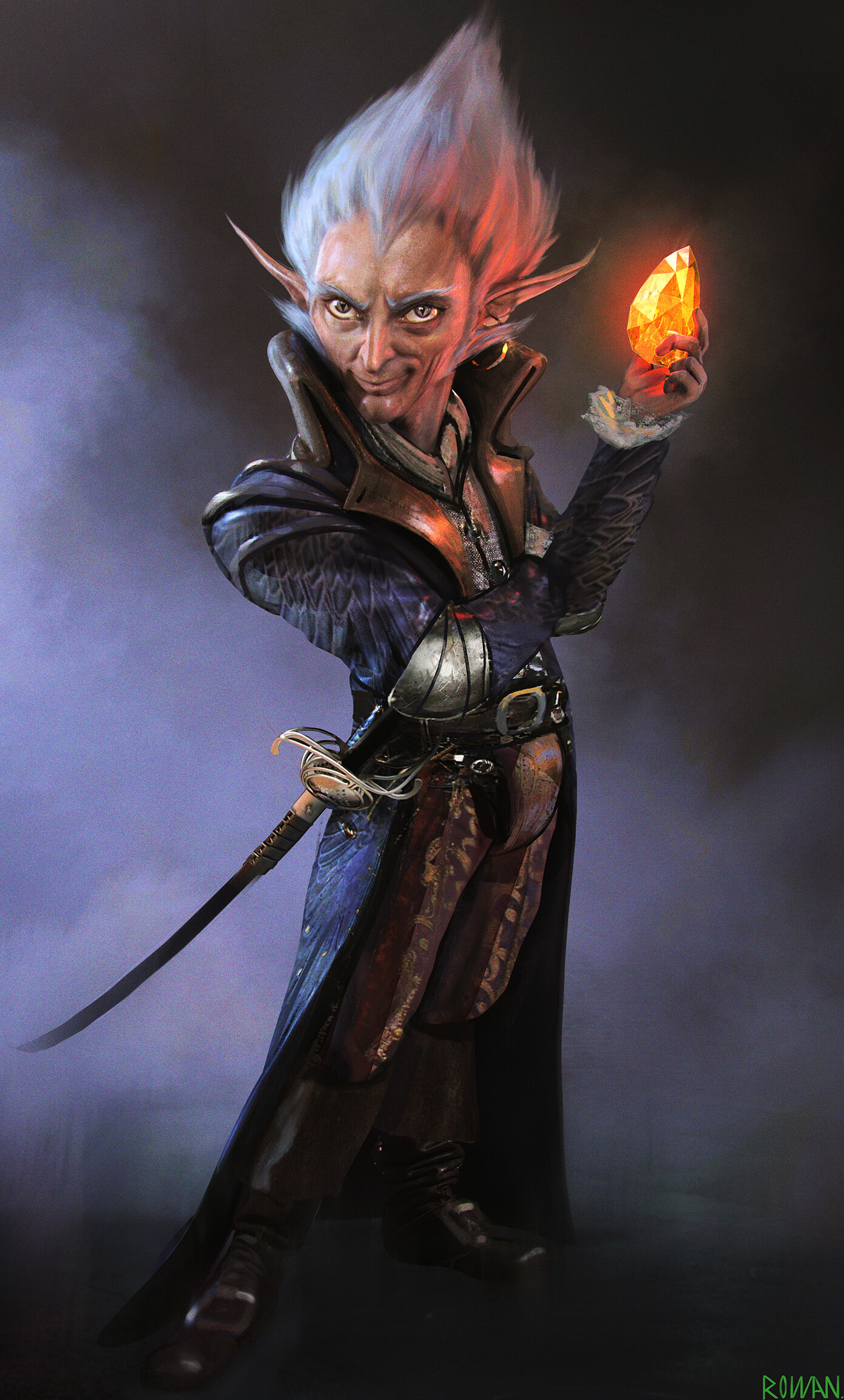
Artwork: Moptop4000 on Deviantart


The idea involves wands rated +1 to +4. This modifier affects two things:

1. Speed: Individual initiative for Spellcasters

2. Defense: Parrying and Saving Throws

Speed: Use the wand’s modifier as a bonus when rolling initiative, assuming the wand’s owner intends to cast a spell. Roll d10s rather than d6s. If relevant to the chosen game mechanics, use the wand’s bonus to reduce casting time (down to 1 Segment minimum). This concerns 1st Edition AD&D and even more so to 2nd Edition whose casting times mostly match spell levels. Casting times listed in Turns aren’t affected, however, those lasting 1 Round can be reduced to the appropriate number of Segments (1 Round = 10 Segments). For D&D-BECMI and similar OSR games, rolling for individual initiative would help, use the rated wands’ bonuses to see when spellcasters can take their turns.

Defense: The wand’s magic can be used to parry melee and missile attacks, just as if its owner were wielding a sword or a shield. Mechanics for parrying vary greatly depending on the chosen game version. Treat the wand’s modifier as a bonus to Armor Class against a specific attack of the owner's choice. Likewise, the wand enables using a combat action to deflect a spell aimed directly at the owner. In this situation, apply the wand’s bonus to a saving throw (provided one is allowed).

            An attempt to deflect an attack whether physical or magical counts as an action. If the players’ intentions have already been declared and the wands’ owners haven’t acted yet, they can still substitute their intended actions with attempts to deflect, regardless of initiative outcomes.

            As an option, the modifier also indicates how many separate attacks could be deflected during the same round. A +1 limits the wand to a single deflection while a +4 wand could thwart up to 4 attacks from different foes, all counted together as a single defensive action during a round. The player picks which attack may be deflected if more than one. Performing fewer deflections than what the wand can handle does not entitle a spellcaster to take some other action during the same round.

As an option, a DM may allow forfeiting two available deflections from wands +3 or better in exchange for a half-move during the round’s movement phase. 

Disarming: This combat action may take place once per round in lieu of all allowable deflections (see Self-Defense above). It counts as a ranged attack limited to a base 90’ range to a visible target, +30’ per “plus” modifier of the wand. The attacking spellcaster needs to roll a d8–2.

            If the score rolled is equal to or less than the wand’s rating, the targeted foe needs to save vs. spells with a penalty equal to the wand’s bonus. If the targeted object possesses a magical modifier of its own, it can be applied as a bonus to its owner’s saving throw. If the saving throw fails, the targeted item flies out of its owner’s hand in a random direction up to 5’ away, plus 10’ per “plus” modifier of the attacking wand (evidently, natural weapons like claws and fangs are unaffected). A targeted foe attempting to deflect a disarming action receives an extra +2 saving throw bonus. One benefit of the disarming mechanics is that it enables magic users to still participate in combat after running out of spells, although success is far from guaranteed.

Wand Movement: Observing the gestures of a wand’s owner provides a clue to another spellcaster on the intended type of action: a spell, a deflection, or a disarming attempt. The target needs to be able to see the attacker(s) to deflect spells. A visible projectile can still be deflected provided the wand’s owner can see where it flies from.

Wand Lengths: They come in 3 sizes—roll 1d6: 1-2. Short (9”-11”), 3-4. Medium (12”-15”), and 5-6. Long (16”-18”). Short wands win ties when rolling for Initiative. Medium-length wands are best for self-defense, conferring an extra +1 bonus to AC or saving throws. Long wands are best for disarming, inflicting an additional –1 penalty to a targeted foe’s saving throw.

            Length does not affect any other properties of the wands, which will be described in a later chapter. The size of a spellcaster isn’t necessarily relevant, although at a DM’s discretion, an owner taller than 6’ using a short wand could lose tied Initiative rolls, while someone shorter than 4’ using a long wand to disarm an opponent could forgo the penalty to an opponent’s saving throw.

The Nature of Wands

            Given the above-mentioned benefits, a rated wand should become an indispensable magic-users’ tool. Its appearance, background story, and the manner in which it was initially enchanted should be of interest. One may assume that the wand chooses its owner, therefore, not all spellcasters should be able to wield all wands, let alone a sentient one.

            The following tables suggest attributes reflecting the philosophy and race of a wand’s original enchanter. To be compatible with a new owner, at least one of the wand’s Shape and Solid Core attributes must fall within a numerical range matching the new owner’s ideals. The desired Shape ranges should be 8 or higher to be compatible with a Lawful character, between 5 and 13 for a Neutral character, and 10 or less for a Chaotic one. The Solid Core ranges are the same but for Good, Neutral, and Evil characters respectively. If both attributes are a match, then the full range of wand’s modifiers is available to its new owner, otherwise, treat as a +1 wand. If neither attribute is a match, then the wand isn’t compatible with its new contender and doesn't work at all.

            When creating a random wand, roll separately for each of all nine attributes, applying the correct adjustment.


Appearance                 (Adjustment: Lawful +2, Neutral nil, Chaotic –2)

Roll 2d8

Shape

Surface Texture

Adornments

0-4

Gnarled

Spikes and thorns

Pommel, tip, and multiple others

5-7

Crooked

Rough, natural bark

Pommel, tip, and one other

8-10

Contoured

Organic pattern

Pommel and tip

11-13

Subdued

Geometric pattern

Pommel

14-18

Straight

Smooth

None

             Shapes: Gnarled wands are the most uneven and twisted devices. A crooked wand is mostly asymmetrical, perhaps with a curved handle or with part of the shaft appearing as a natural piece of wood while the remainder is perfectly straight. A contoured wand features defined and artful shapes: it could be torsade-shaped, evenly braided, ridged, forked, indented, bulging in some places, etc. A subdued device bears a more sober contour, while a straight one is more like a slender, tapering shaft with little or no features. 

            Textures: Smooth wands are unblemished, featureless devices. Geometric patterns are carved on the wands’ surfaces, emphasizing straight lines and angles such as ridges, fretwork, and symmetrical trimmings. Organic patterns involve rounded designs more reminiscent of nature such as floral, leafy, or root-like textures, arabesques, spider webs, cloud or aquatic themes, fish or dragon scales, etc. Rough-style wands are more uneven, with all or part of the wands looking like unaltered pieces of wood. Spikes and thorns are self-explanatory.

            Adornments: They are only suggested here since the list is far from exhaustive. They include incrustations, inserts, plating, tips, pommels, beads, studs, embedded wires, shells, flakes, dangling charms, and so on. An engraved pommel could bear the heraldic arms of the original enchanter or a figure related to the wand’s core components. 

Core Components            (Adjustment: Good +2, Neutral nil, Evil –2)

Roll 2d8

Solid

Fluid (wands +3)

Spiritual (wands +4)

0-1

Fire giant

Red dragon

Demon

2-3

Chimera

Werewolf

Nightmare

4-5

Harpy

Manticore

Hellhound

6-7

Owlbear

Hydra

Mujina

8

Hippogriff

Basilisk

Banshee

9

Wolf

Auroch

Cave Bear

10

Sea serpent

Cockatrice

Elemental (1 of 4)

11-12

Sphinx

Wyvern

Salamander, flame

13-14

Phoenix

Centaur

Djinni

15-16

Pegasus

Griffon

Dryad

17-18

Storm giant

Gold dragon

Unicorn

            Core Components: A rated wand receives up to three core components during its enchantment process. Wands +1 and +2 only have one solid component, such as a hair or a whisker, a feather, desiccated organ powder, sinew, earwax, a bone shard, a fragment of skin, fang, claw, or horn, etc. Wands +3 also have a fluid component, such as bile, saliva, urine, mucus, blood, tears, semen, pus, sweat, stomach acid, or venom. Wands +4 possess all three components, including part of the listed creature’s spirit.

Original Enchanter            (Adj.: Demi-Humans +5, Humans & Dragonkind +5/0, Other 0)

Roll d00

Material

Finish

If Lacquered

1-5

Other Unworldly

Untreated or Polished

Black

6-10

Blackthorn or Bone

11-15

Black Walnut or Bloodwood

16-20

Hawthorn or Larch

21-25

Agar or Alder

26-30

Applewood or Ash

Ashen

31-35

Birch or Cherry

Umber

36-40

Dogwood or Ebony

Crimson

41-44

Elm or Fir

Plum

45-48

Hornbeam or Ivory

Ultramarine

49-52

Mahogany or Maple

Varnished

Moss green

53-56

Oak or Olive Wood

Teal

57-60

Pine or Poplar

Azure

61-64

Redwood or Reed

Celadon

65-68

Snakewood or Sycamore

Scarlet

69-72

Teak or Tigerwood

Amber

73-77

Vine or Willow

Gold

78-82

Acacia or Beech

Silver

83-87

Laurel or Cedar

White

88-92

Elder or Holly

Lacquered

93-97

Rosewood or Ironwood

98-102

Amaranth or Yew

103-105

Other Unworldly

            Original Enchanter: The race of the original wand maker can have a bearing on the material used and how it was treated. Demi-humans include elves, half-elves, gnomes, and fairy folk. Humans/Dragonkind includes humans and spellcasters related to dragons; a choice should be made for this category before rolling dice as to their adjustment (zero or +5), as best fits the wand maker’s philosophy. The “other” category is for all remaining spellcasters, including monstrous creatures.

            Materials: If the day of the month when rolling up the wand is an odd number, pick the first choice. “Other Unworldly” refers to unusual wand materials, such as metal, glassteel, crystal, ceramic, jade, hardened keratin, combinations of diverse materials, or some outer-planar substance at the referees’ discretion. Referees are free to pick materials and their properties.

            Finish: Untreated material is either coarse and with its natural texture or just polished from years of being handled. Ebony, bone, and ivory only ever get polished (no varnish, staining, or lacquering). Varnish gives a satin or glossy shine to the material’s natural color and grain (bark-like surfaces always retain their coarse textures).

            Lacquering: This process involves a tint masking the original material, which is listed in the third column. When checking tints, rolling doubles implies two colors (roll again, ignoring duplicate results).

Document updated June 25 2022 11:09 am.

Click Here for: Pt. 2 Wand Allegiance, Wand Advancement, Willpower.

Sunday, February 6, 2022

Elves in Calidar

Calidar's latest gazetteer is now out. Alfdaín Ascendant and its Series 3 product arc address everything you want to know about elves in this world. The execution draws inspiration from different sources without adhering rigidly to established mindsets.

The focus aims at the elves' ancestries, their in-game abilities, as well as two extra classes (which will actually be released as part of the upcoming PG3 Players' Guide to Alfdaín): elven druids and rangers. All of this is eminently transferrable to other fantasy settings. Since Calidar closely tiptoes around general D&D/OSR game mechanics, instructions are included for systems like the D&D® BECMI game, the AD&D® 1st/2nd Editions games, and others. Later this year, conversion booklets should be released specifically for Labyrinth Lordtm and OSRICtm systems.

People of Alfdaín are often seen as forest dwellers, with a culture reflecting a sylvan environment. Other elves, however, thrive in cities, in mountains, in the shadows, or below the sea. From a gaming standpoint, all traditional character classes are in use. Some flexibility was needed with respect to certain old-style game systems uniformly defining elves as spellcasting fighters. This has been done away with here, opening demi-human races to all careers, which better fits Calidar.

Alfdaín Ascendant describes five separate elven ancestries. Each is adapted to a different native environment. So, there are wood elves of course (the Sherandol), but also winged elves who dwell in the mountains (the Elëan), aquatic elves (the Meruín), nocturnal shadow elves (the Tolarin), and city builders/military types (the Sòldor). Each ancestry features its own set of natural abilities and limitations.

The biggest change to elves is their plant-whispering ability, which enables sending messages through plants (all of the elves except the Sòldor whose focus isn't on nature).

The Sherandol are best in forests. They have combat benefits with bows, superb talents at moving through woods and from tree to tree along their branches, as well as being silent and able to hide well in their preferred environment.

Winged elves... fly! They can withstand colder temperatures than would be the norm for other elves. Some detailed game mechanics are given for traveling by air and maneuvering in 3D.

The Meruín are amphibious, so they can live on the ground and below the sea. They avoid hot and dry conditions. In their natural environment, they are fast, possess empathy with marine wildlife, and enjoy an echolocation ability.

The Tolarin prefer living in the wilderness, away from everyone else, so they can focus on their magical interests. They know how to manipulate shadows, how to move quickly through them, and disorient their foes. Most importantly, they sense residual traces left by spellcasters using their magic, which they can analyze and track later on, much like a ranger does with footprints.

Finally, the Sòldor are urban elves, somewhat like gray elves. They are warriors with a culture resembling that of real-world samurai. Therefore, they get major combat benefits with swords. Their social conformity clashes with the other elves' free-spirited, individualistic ideals.

Two alternate races are also introduced, although they are meant as NPCs. Also known as Qeluín elves, the Qelwë are off-world elves who fled a monstrous invasion and the ensuing dark ages. During the following millennium, they adapted to life in their moon’s Arctic and Antarctic confines. Calidar's world soul progressively altered their bodies to better acclimate them to their glacial environment. They live under the ice, possess snow and ice-related abilities, and travel on the back of flying beasts. They honor elven gods but under other names, appearances, and background stories befitting their culture.

Called the Zindír, the Outcasts, these desert elves aren’t a distinctive sub-race but rather an ethnic group of diverse people, descendants of fugitives from past centuries. Seen as renegades, misfits, cowards, or outlaws by other elves, the Zindír entertain an ideology promising a return to better lands where they will exact revenge upon all who shunned them and usurped their clan lands. Their abilities are most useful in deserts, although mixed with a quarrelsome culture stained with blood feuds.

Fighters and rangers are a must in Alfdaín. Wizards are common, reflecting elven fascination with magic. Conventional priors are an important facet of their followers' culture, with a good number of gods to select from. Those are listed in CC1 Beyond the Skies. Meruín paladins should be expected among the Order of the Rising Tide defending Alfdaín’s eastern shores from sea monsters. Elven druids are equally important: they stand as the first line of defense against magically corrupted forests. Druids also act as advisers to clans and can help settle disputes. They work closely with rangers. Thieves will always exist in any setting, with opportunities to join a local guild or side with law enforcement as bounty hunters. Monk-like heroes aren’t mentioned in Alfdaín Ascendant, but they’re not impossible. Conventional demi-human careers described in some OSR systems are of course entirely acceptable.

Elven clans receive special treatment. Aside from races, cultures, statuses in society, wealth and personal clouts, nationalities, religions, political preferences, and what secret sects elves may belong to, clan lineage remains one of the most important factors in how they deal with each other. Some clans are more powerful than others, some form alliances, others are rivals, etc. The system described in Alfdaín Ascendant can easily be transplanted to another campaign world.

Early in their careers, PCs may be invited to join secret guilds. Dangerous forces are at work in Alfdaín. The Acorn seeks to replace organized governments with the old clan-based structure. The Eye of Mythuín employs spies working for Alfdaín’s matriarchal government. On the darker end of things, the Guild of Shadows notoriously controls thieves throughout the realm. Night Snatchers are universally feared for abducting gnomes, fellfolk, and prominent enemies of Alorea, a military dictatorship on Alorea, the elves' ancestral moon. The general population is well aware of these groups’ existence. Other actors are less well-known although quite relevant.

Altogether, this gazetteer offers a very granular perception of what elves are individually and as a people.

Friday, October 22, 2021

Star Phoenix Revisited

What a difference several years make. When I embarked on the mission to publish my own books eight years ago my skill level was minimal. Most of what I learned during my 15 years at pre-WotC TSR in the 80s and 90s was still there, but much of it no longer matched the self-publishing realities of the 2010s or the kind of work required when operating independently from an established publisher with somewhere near 100 employees. In the distant wake of the Voyage of the Princess Ark that I authored in the 90s for Dragon Magazine, I wanted a series of skyship deck plans to be featured at the World of Calidar's core. At the time, I had no idea what to expect from a Kickstarter, and the price tag of having these maps drafted by professionals seemed well over what I might be able to afford. So, I drafted the maps the best way I could back then. Here's a "before" & "after" snapshot showing what the original maps looked like vs. what I'm doing now.

Before: a simple diagram published in CAL1 "In Stranger Skies" in 2013


After: a work-in-progress rendition of the revised main deck & superstructures

I use a freeware application called PaintNet. Though limited in its graphic abilities, its learning curve is fairly low. It does require a lot of add-ons, and I rely heavily on 3rd party textures and stock art for details. Those took years to accumulate. The result speaks for itself. Here are a few more sneak previews of the final work.

Main Deck, Stern Section

Outlines Layer by Itself

Work files are raster graphics, which presents a challenge when adding colors or textures within line art. To prevent badly pixilated edges resulting from a simple attempt to fill in colors, layered graphics become a must. The complexity of fully detailed renditions often requires 15-20 layers (such as outline layers above color or texture layers, or whatever lies on a table layered above table graphics, which lies above chair elements, carpet graphics come next, and that lies above floor textures, and so on). Add to this any number of temporary layers that get merged with permanent ones during the drafting process. Patience with this is key.

Filled-In Textures Layer

Good luck making corrections later if something doesn't look quite right. Every single layer will need to be looked at. A common mistake is adding something to the wrong layer, and then spending precious time later to find which layer it was put on. This is when the cats perk up at the sound of muttered French swearing as I switch layers off and back on, hoping I didn't mess up something else.


How about some shadows?


The texture for the floor or in this case a ship's wooden deck begs for some thinking as regards how it might blend in with a grid. Some trial and error is to be expected here until the graphics are scaled properly.

Grid vs. Texture Layers

You're getting the idea. Add to this the layers for what should show "above" the walls' texture, such as doors and windows. Way up higher, you'll position layers for map symbols (stairs directions, secret doors, etc.) and labels.

Upping the Ante: the Lower Deck with full details

Here's another view with everything and the kitchen sink. Oh, the joy of making sure stairs connect exactly with those on adjacent decks. I'm a stickler for this, although most players and DMs won't lose sleep over a few pixels. While in game, this won't matter. I made precisely this kind of error in my original diagram of 2013, much to my dismay. It's now fixed in the revised version. Ugh. How embarrassing.

Just for fun, I'm including a screenshot of the hold's forward section. The final work includes two 12"x18" sheets and the digital files rendered at 600 dpi (with and without labels). I'll see if I can include VTT files for use with Roll20 and such; that's new territory for me. Drafting the revised deck plans took exactly 2 weeks, working pretty much full time, using the old map version and the original sketch produced by the cover artist, Ben Wootten. The design was part of the last Kickstarter project I ran, July 2021. Backers receive this as part of their rewards. The deck plans will become available to the public on DriveThru probably before the end of this year. Ideally, I'd like to redo all of the deck plans in CAL1, but this will have to wait until I'm done with the current project. If you have questions, contact me via Facebook or Twitter. Hope you enjoy your weekend!
Happy Flying!

Monday, September 6, 2021

Local News in Alfdaín

Here I am, running out of space for the miscellaneous news and local rumors in the upcoming players' guide to Alfdaín. Ah, heck. Let's masquerade this section as a glimpse of a local newspaper. Just a bit of fuff today!


Try this link for the full-res image.

Saturday, June 12, 2021

Updated Gnome Class (OSR D&D-BECMI)

The next character class on my update list is the gnome. The experimental version I'd posted back in March was a bit controversial. Some readers didn’t like the idea of a gnome illusionist, so I’ll split the class into a simple warrior and an illusionist version. If you want something else entirely, you have the tools to create a class option that meets your goals. Again, there’s plenty of room for options!

Art Credit: D&D Gnome fan art by Sam Rowan -- ImaginaryGnomes on Art Station

Background: This is part of an ongoing series of articles about level progression mechanics. It all started with experimental updates to the magic-user and cleric spellcasting tables posted last January. A number of updated or new character classes followed. Feedback on those was useful—thank you! Suggestions will be incorporated in later updates wherever practical. This led me to create a user-friendly Excel spreadsheet to help put numbers together quickly and easily. This spreadsheet is particularly useful in making sense of the math used when creating homebrew character classes, and in ensuring some degree of consistency across the board. Click here for info on updated saving throws.


The Updated Gnome

I compiled the various features and abilities given in the source article to obtain a simple warrior class, and another with the magical abilities described originally. You’ll have to go back and refresh your memory about the initial design.


1. Gnome Fighter: Chop up the magical skills and feed them to the wolves. Keep all the racial and fighter abilities, and you end up with a Base xp 1,800. The saving throws are the same for both gnome classes.

2. Gnome Illusionist: Keep all the racial abilities. Reduce the fighting skills and related combat abilities to those of a cleric. Weapons and armor permitted are those of a standard magic-user. The original article describes magical skills (abilities rather than traditional spells). The gnome illusionist ends up with a Base xp 1,700.

Resulting experience tracks based on the Excel spreadsheet are listed below. If you're looking for the author, he fled south of the border.